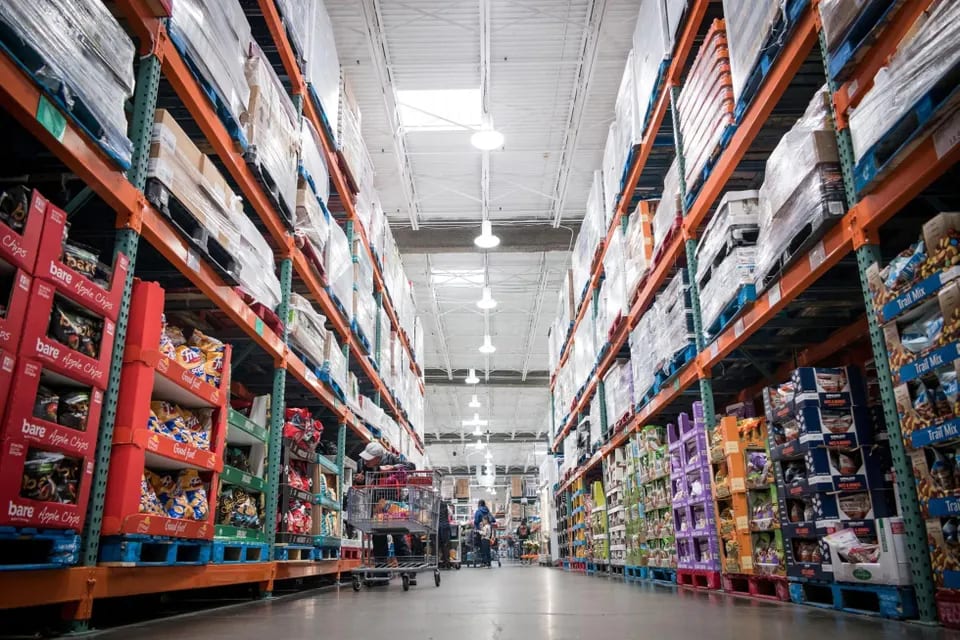
Why Costco Prices Swing More in Some Years Than Others

Quick answer: Costco's prices move up and down more in years when supply chains get squeezed, shipping costs spike, or inflation runs hot — because Costco buys in huge bulk quantities and passes cost changes on to shoppers faster than smaller retailers, in both directions. When input costs settle down, so do the swings. That's also why price-drop tracking tools matter more in volatile years: more swings mean more chances to catch a 30-day price adjustment refund.
Key takeaways
- Costco's bulk-buying model means price changes ripple through its warehouses faster than at smaller stores, for both increases and decreases.
- Years with supply chain disruption or high inflation tend to produce more frequent price swings on electronics, food, and household goods.
- Costco offers a 30-day price adjustment window on most items in the US and Canada, so tracking recent purchases matters most in volatile pricing years.
- Seasonal events like Labor Day and Black Friday often trigger short-term price drops that vanish within days, which is when adjustment refunds are easiest to miss.
Costco owes you money when prices drop
If something you bought gets cheaper within 30 days, you can claim the difference. CostRefund watches your receipts and tells you when you're owed.
Start freeWhy does Costco's pricing move more some years?
Costco's prices swing harder in years when the cost of getting goods onto shelves is unstable — think shipping container rates, fuel costs, raw materials, and labor. Costco operates on razor-thin markups compared to most retailers, often citing a policy of capping markups well below typical department store margins. That thin margin means when a supplier's cost changes, Costco has less room to absorb it quietly, so the change shows up in the shelf price sooner.
In calmer years, suppliers have stable costs, shipping is predictable, and Costco can hold prices steady for long stretches. In turbulent years, three things tend to happen at once:
- Input costs rise unevenly — a spike in cardboard, steel, or cooking oil prices hits some product categories harder than others.
- Shipping costs become unpredictable — ocean freight rates can jump or crash within months depending on global demand.
- Suppliers renegotiate contracts more often — instead of annual pricing, some categories see quarterly or even monthly adjustments.
The result is a choppier price chart. A rotisserie chicken or a jar of peanut butter might barely move, but electronics, furniture, and seasonal goods can swing 10-20% within a single quarter when the supply chain behind them is under stress.
Which product categories swing the most?
Electronics, furniture, and seasonal goods swing the most, while center-of-store food staples swing the least. Costco has publicly emphasized keeping staple prices stable for members even during inflationary periods, treating items like its $1.50 hot dog combo as a symbol of that commitment. That stability doesn't extend evenly across the warehouse.
| Category | Typical price volatility | Why |
|---|---|---|
| Electronics (TVs, laptops, tablets) | High | Component costs, chip supply, and rapid model turnover |
| Furniture & mattresses | High | Freight-heavy, bulky, tied to lumber and foam costs |
| Seasonal/holiday goods | High | Short sales windows, markdowns to clear inventory |
| Tires & auto | Moderate | Rubber and shipping costs, tracked in more detail in our tire price adjustment guide |
| Jewelry & watches | Moderate | Gold, silver, and diamond commodity price shifts |
| Packaged food & pantry staples | Low | Costco absorbs more cost pressure to protect member trust |
| Produce & fresh food | Low to moderate | Weather and harvest-driven, but short-lived swings |
If you're chasing refunds, electronics and furniture are where the real money sits. A $1,400 TV that drops to $1,199 three weeks after you buy it is $201 back in your pocket — and that's a realistic swing size for a category this volatile, not an edge case.
Does inflation actually make prices drop, or just go up?
Inflation makes prices more volatile in both directions, not just higher. This is the part people miss. When overall inflation is elevated, retailers including Costco often build in some price cushion to protect against further cost increases. If supply eases faster than expected, or demand softens, that cushion turns into a markdown.
This is exactly why price-drop years and price-adjustment years tend to be the same years. A TV priced defensively high in June might see a real cut in September once a chip shortage eases or a competitor's inventory forces a warehouse-level reset. The U.S. Bureau of Labor Statistics tracks these swings through the Consumer Price Index, and durable goods categories like electronics and appliances have shown some of the sharpest up-and-down movement in recent inflationary cycles.
Don't skip this: A price swing only turns into money back if you act inside the window. Costco's price adjustment policy generally covers 30 days from your purchase date in both the US and Canada, but Costco Canada handles some item categories and online orders differently, so always confirm the current rule for your item at the warehouse or on Costco's own policy page.
Why do prices seem to swing more around Labor Day and Black Friday?
Seasonal sales events compress a year's worth of price movement into a few days, which is why adjustment refunds spike right after them. Retail events like Labor Day weekend or Black Friday aren't random — they're when Costco and its suppliers time planned markdowns on TVs, laptops, and headphones to move inventory before new models arrive.
Here's the catch: those sale prices often last only a week or two before climbing back up. If you bought a Dell laptop or a Bose headphone set the week before a Labor Day sale posted, you're sitting on a textbook price adjustment case. Miss the 30-day window and that refund opportunity is gone for good.
This is also where a lot of shoppers get confused about curbside and online orders behaving differently than in-warehouse purchases — we cover those distinctions in our curbside pickup price adjustment guide.
What should shoppers actually do about it?
Track your recent Costco purchases and watch for price drops inside the 30-day window, especially on higher-volatility items. In a year with more supply chain noise, that habit pays off more often than usual because the underlying prices simply move more.
A practical checklist for volatile pricing years:
- Save every Costco receipt for at least 30 days, digitally or on paper.
- Flag big-ticket purchases — electronics, furniture, tires, jewelry — for closer tracking, since they swing the most.
- Check prices weekly on anything bought within the last month, not just once at checkout.
- Watch for seasonal sale windows around Labor Day, Black Friday, and back-to-school, when markdowns cluster.
- Confirm your country's rules before assuming a refund applies — Costco Canada's price adjustment policy isn't identical to Costco US.
- Ask at member services or check Costco's own policy page if you're unsure whether an item qualifies.
Manually checking prices on a dozen recent purchases every week isn't realistic for most people, which is exactly the gap CostRefund was built to close — scan a receipt once and get flagged automatically if something you bought drops in price within the adjustment window. It's the same idea behind setting up alerts before you even buy, which we walk through in setting up price-drop alerts.
Will prices calm down, or is this the new normal?
Nobody can predict future pricing with certainty, and any source claiming otherwise is guessing. What's documented is that price volatility tends to track broader economic conditions — freight costs, commodity prices, and inflation data published by agencies like the U.S. Bureau of Labor Statistics and Statistics Canada. When those inputs stabilize, retailer pricing historically stabilizes with a lag of a few months to a year.
The practical takeaway isn't about predicting the future. It's about building a habit that works regardless of which direction prices move next. Shoppers who check recent purchases against current prices catch refunds in calm years too — there are just fewer of them to catch.
If you want to turn that habit into something less tedious, CostRefund tracks it for you and turns every catch into part of your running savings total. Members on the app's leaderboard have found that a little friendly competition — comparing lifetime savings with friends — makes checking for price drops feel less like a chore and more like a game worth winning.
Related articles
Blog by Segeo — new article every day.
Keep reading
- Costco Price Adjustment Etiquette: What's Fair to AskSeptember 6, 20267 min read
- How to Get a Costco Price Adjustment on Baby GearSeptember 4, 20267 min read
- Costco Air Fryers 2026: Best Prices, Deals and Return RulesOctober 22, 20267 min read
- Costco Saunas 2026: Prices, Infrared vs BarrelOctober 22, 20268 min read
- Costco Price Tracker: Get Alerted When Prices DropSeptember 22, 20265 min read
- Costco Return Policy 2026: Electronics, No Receipt & MoreSeptember 22, 20266 min read
Start Saving on Costco Today
CostRefund automatically monitors price drops and helps you claim refunds. Create your free account and never leave money on the table again.
Start Saving